The Matching-Pot Mistake: When a Set Looks Too Uniform
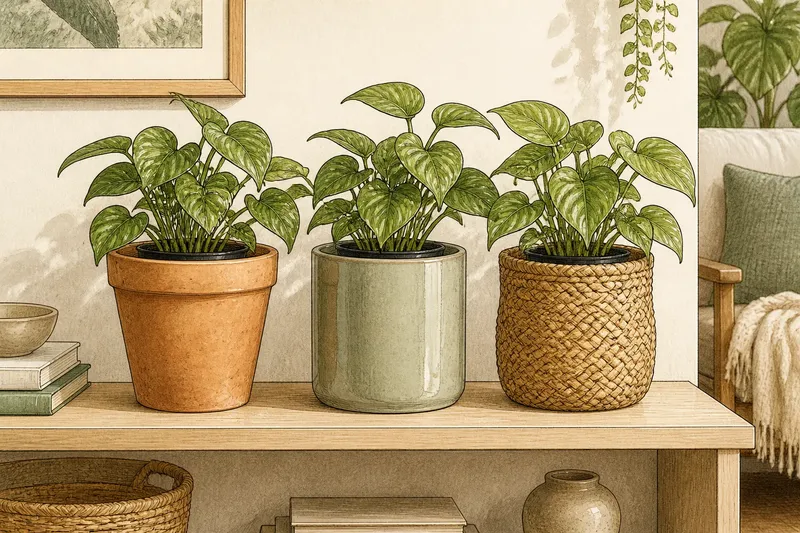
Matching pots can make a plant display feel flat. Learn how to vary the composition with foliage, negative space, and one deliberate point of contrast.
Why can matching pots make a healthy plant display feel flat? Often, the plants and vessels repeat the same visual beat, so your eye moves past the grouping without finding a point of interest. You can keep the pots and change the composition by shifting attention to the relationships among leaves, open space, and the room.
That approach is different from shopping for more container shapes. Instead of treating each pot as a design object, consider what the plants do together: overlap, echo a line, or create a pause against a wall. The aim is to make a composition that feels intentional without asking the vessels to carry it.
Use foliage as the main source of contrast
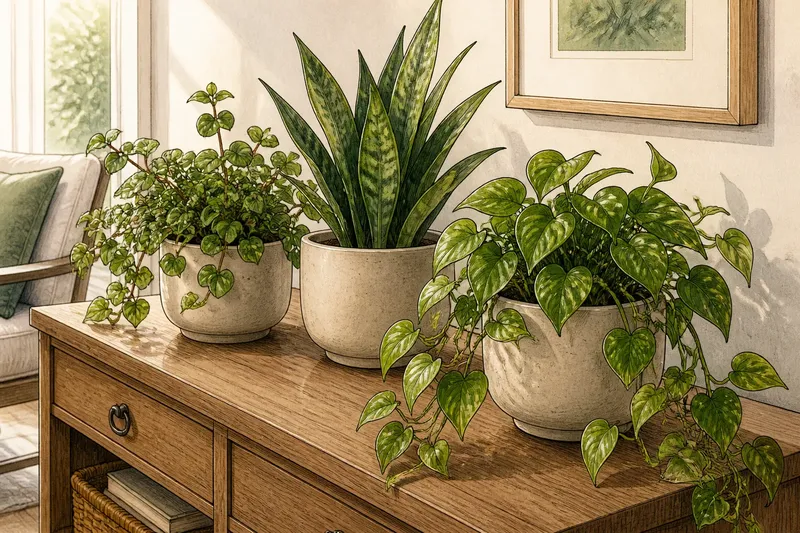
Matching pots provide a quiet base, which can help when the plants have noticeably different forms. A plant with upright leaves beside one with a relaxed, trailing habit creates a contrast that comes from the foliage rather than the containers. Even when the leaves share a similar color, differences in direction and density can make the grouping easier to read.
Start by looking at the plants from the angle where you usually see them. Notice which leaves rise above the others and which spread sideways or hang down. Give those forms room to remain distinct instead of letting every plant merge into one dense mass.
For instance, say you have a compact plant with upright leaves and a trailing plant in identical pots on a console. Move the trailing plant to one end and let its stems fall into open space, while keeping the upright plant nearer the center. The expected result is a clearer distinction between vertical and downward movement, even though the vessels still match.
Arrange the plants around a visual pause
A display does not need to fill every inch of its surface. Empty space around or between plants gives the eye a place to rest and helps each silhouette register. This can be more effective than adding a contrasting pot simply because the arrangement looks sparse.
Look for a natural pause: a visible patch of tabletop, a gap between leaf shapes, or an unoccupied stretch beside the group. If the plants crowd one another, separate them enough for their outlines to read. If the gap makes the group feel disconnected, bring the plants closer or let one leaf line gently bridge the space.
Keep the plant’s needs in view while composing. Do not place a plant where the light is unsuitable just to create a more pleasing gap, and leave room to reach each pot for care. If the best visual arrangement conflicts with a plant’s growing conditions, give the plant a better location and compose around that choice.
Create rhythm through height and direction
Identical pots can still support a varied composition if the foliage forms a changing rhythm. A sequence of upright, spreading, and trailing growth gives the eye a path through the group. Repeating a direction too evenly may make the display feel static, while a deliberate shift can make the same set of pots feel more alive.
Try arranging plants so their strongest lines lead toward one another or toward a central area, rather than pointing every leaf outward. A tall plant can anchor the grouping, while lower or softer forms create a transition beside it. Let the plants remain distinct; the goal is a readable relationship, not a tightly packed bouquet.
Think about height as a relationship, not a contest. If every plant rises to a similar level, moving one to a different surface can change the outline of the entire display. Use a stable stand or shelf only when it suits the plant and leaves the arrangement secure and easy to care for.
Choose a focal point without adding a new pot
A focal point can come from a distinctive leaf, a particularly graceful stem, or the way one plant catches the available light. Place that feature where it can be noticed, then let the other plants support it rather than compete for equal attention.
Say you have three similar plants in matching pots, and one has a broad, unusually patterned leaf. Place that plant where the leaf is visible from the room’s main approach, then angle the other two so their foliage frames it without hiding it. The expected result is a clear visual lead created by the plants, not by a different vessel.
Be cautious about turning a display toward a window if that would leave other plants poorly suited to the light. A focal point should come from a placement that works for the plants, not from forcing them into a single decorative pose.
How can matching pots feel less repetitive?
Can I keep every pot identical and still make a lively display?
Yes. Let the plants differ in height, leaf shape, or direction, and leave enough space for those differences to show. A shared vessel style can make the foliage contrast easier to notice.
What should I change if the grouping looks crowded?
First separate overlapping leaves and make the outline of each plant easier to read. If the surface is too small for that, move one plant elsewhere rather than compressing the group.
How do I make a focal point with similar plants?
Look for a plant with a distinctive leaf, stem, or growth habit and position that feature where it remains visible. Keep the other plants from covering it, while preserving suitable light and access for care.
Should I rearrange plants to make a stronger shape?
Only if the new placement still suits each plant’s light and space needs. If a more dramatic arrangement would compromise those needs, keep the plants in appropriate places and build the composition around them.
Use a quick observation to choose your next move
Before changing the display, identify what your eye notices first. Then make one adjustment and look again from the spot where you normally enter or sit. This keeps the decision focused on the composition rather than prompting a full rearrangement.
- Observation: The leaves overlap until individual plants are hard to distinguish. If a small separation makes their outlines clear, then keep the group together; if the surface cannot provide that space, then move one plant to another suitable spot.
- Observation: Every plant rises to a similar height. If one plant can sit safely on a suitable stand or lower surface, then change its level; if that would make access or placement unsuitable, then keep the heights and create contrast through spacing.
- Observation: All the foliage points in the same direction. If a plant can be turned without compromising its conditions, then adjust its presentation; if its position should remain fixed, then use the other plants’ placement to create a different visual line.
- Observation: One plant’s strongest feature is hidden. If shifting a neighboring pot reveals it, then make that small move; if the feature remains obscured, then choose another focal point in the group.
- Observation: The display fills the whole surface. If moving a plant leaves a useful patch of open space, then preserve that pause; if the gap makes the plants feel unrelated, then bring them closer or use a different surface.
- Observation: A visually pleasing spot does not suit one plant’s conditions. If another appropriate location is available, then move that plant and compose around its new position; if not, then prioritize its needs over the display.
Work through the grouping before changing anything
Imagine you have three plants in identical pots on a living-room console: a tall upright plant, a compact plant with broad leaves, and a trailing plant whose stems are getting tangled with the others. The grouping looks like one green block, and the trailing stems partly cover the broad leaves.
First, keep the upright plant near the center as the visual anchor. Next, move the compact plant to one side so its broad leaves have a clear outline. Then place the trailing plant at the opposite end, where its stems can fall into open space without crossing the broad leaves. Finally, step back and check that each plant remains in a suitable spot and that you can reach the pots for care. The expected result is a composition with a visible center, distinct plant shapes, and a clear direction across the console; if the plants cannot fit that way while meeting their needs, use separate locations instead.
Matching pots do not need to supply all the variety in a plant display. When you compose with foliage, spacing, and direction, the vessels can stay quiet while the plants give the grouping its character. For matching pots that feel less repetitive, make the next change small and judge it by what becomes easier to see.