A Tall Plant Changes the Room’s Vertical Rhythm
See how a tall plant changes a room’s vertical rhythm, relates to nearby furniture, and gives the eye a natural path through the space.
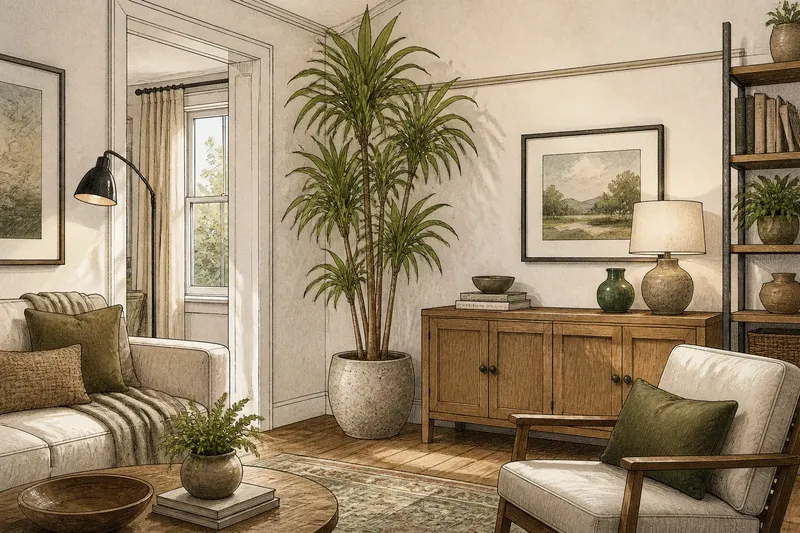
How do you know if a tall plant will suit a room without measuring it against a fixed rule? Look at what the plant’s outline will connect: the floor to a chair back, a low cabinet to a window frame, or a quiet corner to the rest of the furnishings. A tall plant changes a room’s vertical rhythm by giving the eye a living shape to follow, and its effect depends as much on its silhouette and surroundings as on its height.
How can a tall plant guide the eye through a room?
A plant draws attention upward when its stems or leaves create a clear path from the floor toward the upper part of the room. A slim dracaena, for instance, can pull the gaze from a low console toward a nearby picture rail. A broad-leaved plant may instead hold attention around its crown, making that area feel like a visual destination.
Notice what the eye encounters before it reaches the plant. If a sofa, floor lamp, and curtain already make a strong sequence of vertical forms, another upright shape may reinforce that rhythm. In a room dominated by low, horizontal furniture, a plant with a rising outline can introduce contrast and keep the arrangement from feeling visually flat.
The direction of the leaves matters. Upright foliage tends to emphasize height, while arching or outward-reaching leaves spread attention sideways. A plant can therefore feel tall without reading as a narrow column. Before choosing one, imagine its mature outline in the exact place you have in mind, not just its current shape at the garden center.
How should a plant’s outline relate to nearby furniture?
Compare the plant with the objects closest to it, then step back and consider the whole grouping. Beside a low cabinet, a rising plant can form a deliberate contrast. Next to a tall bookcase, a similarly upright plant might blend in, while a looser crown can soften the edge of the furniture.
Look at the top edge of the nearest furniture. A plant whose crown sits just above a chair back can make the two forms feel connected. If it rises much higher, it may become a stronger focal point; that can work well when the corner needs attention, but it may distract from a nearby artwork or view.
Width deserves equal consideration. A spreading crown that reaches over a narrow side table can make the grouping feel crowded even when the plant’s height seems appropriate. Conversely, a slim plant beside a broad sofa may appear isolated unless another nearby form helps link them. Judge the visual footprint of the foliage as well as the space the pot occupies.
Say you have a low oak console under a small framed print, and you are considering a slender ficus for the open end. Imagine the plant’s crown rising beside, not in front of, the print. If that outline makes the print feel pinched, a less spreading plant or a different position may leave both forms legible; if the crown extends the console’s line upward without covering the art, the pairing may feel more settled.
How can you judge scale without a fixed sizing rule?
Use visual relationships rather than a universal height target. Stand where you usually enter or sit, and compare the plant’s highest point with nearby landmarks: the back of a chair, the top of a cabinet, a window mullion, or the lower edge of a ceiling beam. These comparisons reveal whether the plant will read as a quiet companion or a dominant feature.
A quick paper mock-up can make an uncertain choice easier. Cut a loose outline from kraft paper, or hold a long strip of paper where the plant’s crown might reach. You do not need to reproduce every leaf; the aim is to see whether that vertical presence competes with a lamp, blocks a sightline, or fills an awkward gap.
Try viewing the placement from more than one angle. A plant that seems balanced from the doorway might obscure a reading lamp from the sofa, or overlap a doorway when seen from the hall. Check the everyday routes and viewpoints, not just the spot where the display looks best in a photograph.
Also consider the room’s visual weight. Dark, dense foliage can feel more substantial than an airy plant of similar height. A plant with separated stems allows more of the wall to show through; a full crown can make a bare corner feel occupied. Neither effect is automatically better. Choose the outline that suits the amount of visual presence the room needs.
Where does a tall plant make the most sense?
A tall plant can connect elements that otherwise seem unrelated. Beside a low sideboard, it can carry the eye from the furniture toward a higher picture or window. At the end of a sofa, it can mark the boundary between a seating area and an open walkway. In a bare corner, it can provide a distinct form without adding another piece of furniture.
Placement should leave the room’s useful paths clear. A plant that forces people to turn sideways or brush its leaves can make a carefully composed corner frustrating. Consider how far foliage spreads beyond the pot, especially where people pass, reach for curtains, or open a door.
Windows and lamps introduce practical constraints as well as visual ones. Avoid putting foliage where it will routinely block a view or shade a task light. The suitable light for a particular plant depends on the species and the conditions in your home, so check its care label or reliable grower guidance before settling on a spot. Where a plant’s preferred light and your desired composition do not overlap, choose a better-matched plant rather than forcing the placement.
Give the display enough breathing room to retain its outline. Leaves pressed against a wall may lose their shape or make the corner look cramped. A little separation can make the silhouette easier to read, though a plant should still sit where its everyday care is manageable.
Which plant shapes create different vertical effects?
Plant form changes the character of the height. An upright, narrow plant creates a clean line and can echo architectural details. A plant with a branching crown produces a more open, irregular outline, while arching fronds soften the transition between height and width. A broad-leaved specimen gives the upper part of the arrangement more visual weight.
Think about the furnishing style as a collection of shapes rather than a set of matching objects. A rigid, straight-backed chair may benefit from foliage that bends or branches. A room with many rounded forms may welcome a more upright plant that adds direction. The goal is not to imitate every line in the room, but to choose a plant whose shape contributes something the other forms do not already provide.
Growth habits can alter the composition over time. A plant that begins as a narrow vertical accent may develop a wider crown or lean toward a light source. Leave room for the outline to change, and turn the pot periodically if that suits the plant’s needs. If its shape eventually crowds nearby furnishings, a new position can restore the visual relationships.
What should you ask before choosing a tall plant?
Will a tall plant make a small room feel smaller?
It can if its foliage crowds a passage or overlaps too many nearby forms, but height alone does not decide the effect. A relatively open silhouette may add a vertical accent while leaving wall and floor visible. Judge the plant from your usual viewpoints and pay attention to its spread as well as its crown.
Should the plant be taller than the furniture beside it?
Not necessarily. A crown slightly above a chair or cabinet can link the forms, while a much taller outline can establish a focal point. Decide whether the plant should blend into the grouping or lead the eye, then compare it with the nearest competing vertical shapes.
Can a tall plant sit beside artwork or a window?
Yes, if its leaves do not hide the part of the artwork or view you want to keep visible. A branching outline can sit alongside a frame, while a dense crown may compete with it. Check the overlap from the room’s common seating and walking positions.
What if the plant looks right from one angle but wrong from another?
Try a small shift in position or rotate the pot so the outline opens toward the room. If the plant still interrupts an important route or view, another location may suit both the plant and the room better. A display should work during ordinary use, not only from a single viewing spot.
How can you keep the plant’s vertical rhythm in tune?
Revisit the arrangement when the plant grows, when furniture moves, or when a new object changes the balance around it. A plant that once connected a chair to the wall may later cover a lamp or crowd a framed print. You do not need to redesign the whole room; shifting the plant, adjusting nearby objects, or choosing a different viewing angle may be enough.
For a tall plant that changes a room’s vertical rhythm in a pleasing way, let its outline answer a real need: a low group that needs lift, a corner that needs definition, or a sequence of shapes that needs a softer link. Then check the silhouette against the furniture, the sightlines, and the paths people actually use. That simple habit helps the plant feel part of the room rather than an object placed there only for height.