From Conservatory Specimen to Houseplant Display
Learn how to place a houseplant display around one room feature, with a worked example that balances a shelf, a lamp, and an everyday task.
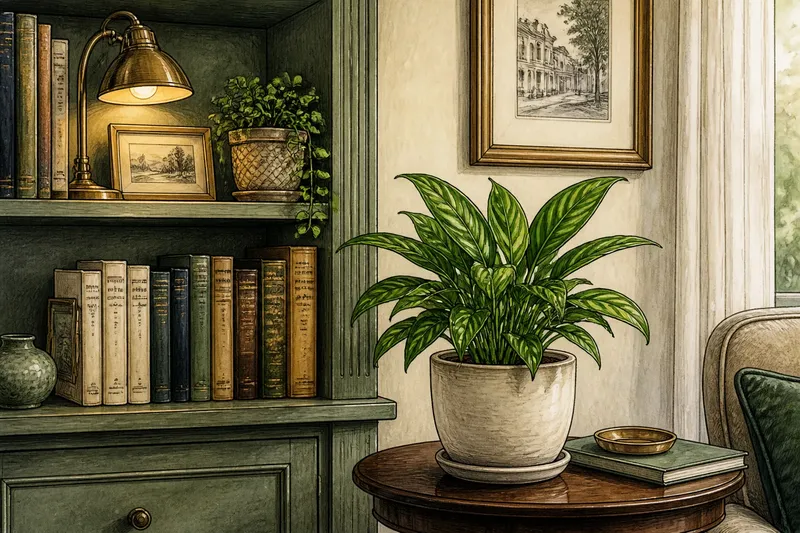
Where can a houseplant display feel intentional without turning the room into a greenhouse? Start with one feature already in the room—a bookcase, fireplace, or sideboard—and compose around its shape rather than treating every empty surface as an invitation.
Older homes and current homes vary too much for a single history of indoor plants to fit them all. Conservatories and sunrooms have served as places to grow and enjoy plants in some households, while other plants have occupied ordinary rooms and windowsills. For styling, the useful distinction is not a claim about how everyone once lived; it is the difference between arranging plants as the main event and making them part of a room’s existing composition.
Begin with one feature that can anchor the display
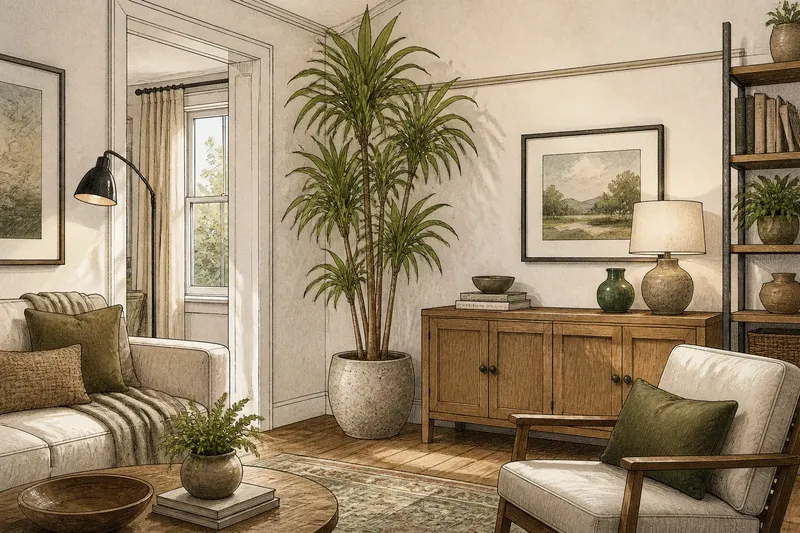
Choose a feature with a clear outline: a bookcase, console table, or fireplace mantel. The plant arrangement can relate to its height, width, or visual weight. This gives the display a specific job, such as softening the straight edge of a shelf or drawing the eye toward a quiet corner, without requiring the whole room to be rearranged.
Keep the plant’s needs in view while choosing the anchor. A beautiful mantel is not useful if it cannot provide an appropriate place for the plant. Check the plant’s care label or a trusted grower’s guidance for light and watering needs, then look for a suitable position near the feature rather than forcing the plant onto it.
Use shape and scale to connect plants with furnishings
Compare the plant’s outline with the furniture around it. Upright leaves can echo a narrow lamp or the vertical sides of a bookcase; arching foliage can soften a stack of books or a rigid shelf. A compact plant may suit a small table, while a broad form needs enough visual breathing room that it does not blur into nearby objects.
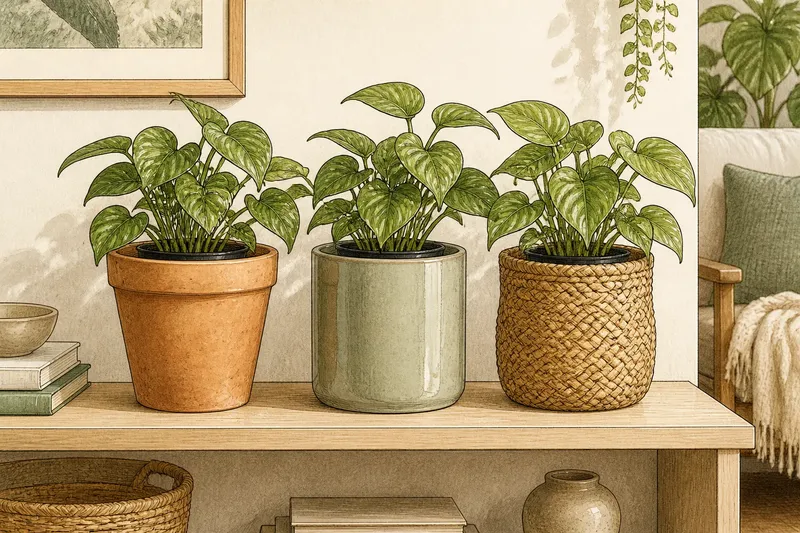
Vessels can help make that connection. A simple ceramic pot can calm a busy arrangement, while a vessel with a distinct silhouette can repeat a curve elsewhere in the room. Keep the plant’s own form visible: if a patterned pot and nearby objects compete with its leaves, simplify one of those elements.
Build a small arrangement without crowding its anchor
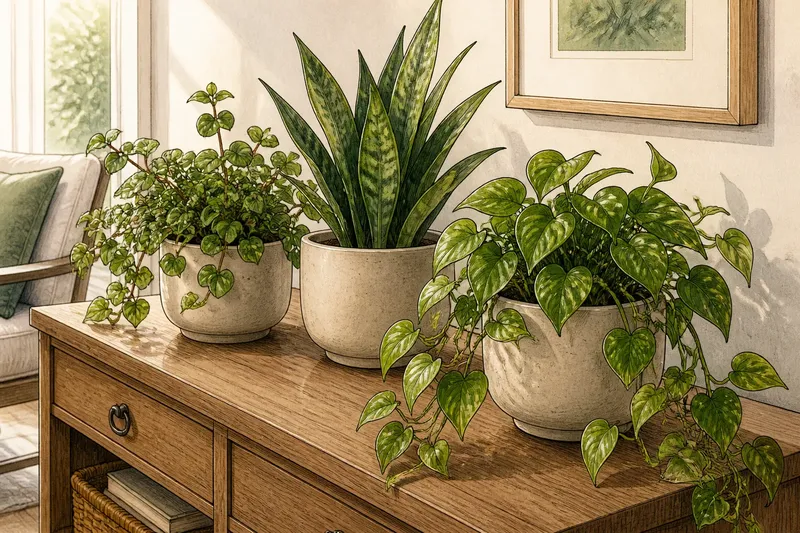
For a group, vary the plants’ silhouettes instead of lining up matching forms. Pair an upright plant with a lower, spreading one, or set a trailing plant where its leaves can hang without covering a switch, book title, or working surface. Leave some of the furniture visible so the arrangement still reads as part of the room rather than a pile of pots.
- Observe whether the plant’s leaves overlap a lamp shade or block its light; if they do, move the plant beside the lamp or choose a lower form.
- Observe whether the vessel hides the furniture’s edge; if it does, use a smaller or visually quieter pot, or place the plant on a separate stand.
- Observe whether a trailing stem covers a book title or control; if it does, guide the growth away from that area or choose a different position.
- Observe whether the display’s colors disappear against the furniture; if they do, introduce a contrasting vessel or move the arrangement against a clearer background.
- Observe whether the grouping looks like one continuous mass; if it does, separate the pots or remove one plant, then keep the version with clearer individual shapes.
- Observe whether the intended anchor remains recognizable; if it does not, reduce the group or place one plant nearby rather than directly on the feature.
How can a houseplant display suit a room feature?
Should a plant sit on the furniture or beside it?
Use the furniture only if the surface can support the pot and the plant receives suitable conditions there. Otherwise, place the plant beside the feature so its shape still relates to the furniture without taking over a useful surface.
How do I choose a pot that fits the arrangement?
Compare the pot’s color and outline with the furniture and nearby objects, then choose either a quiet match or a deliberate contrast. Also make sure the vessel works for the plant’s care needs, using an appropriate inner pot or drainage setup when needed.
Can I make a display with one plant?
Yes. One plant can give a shelf or sideboard a focal point when its form is distinct from the objects around it. Keep nearby items simple enough for the plant’s outline to remain visible.
What if the best-looking position does not suit the plant?
Keep the plant where its care needs can be met, then adjust the composition around that position with a suitable pot or nearby furnishing. If the room cannot offer appropriate conditions, choose a different plant rather than relying on styling to solve the mismatch.
Work through a display with the objects already in the room
Imagine you have a narrow bookcase, a table lamp on its top shelf, and a compact plant in a plain pot. The starting point is the lamp, which already draws attention, and the shelf space beside it. First, you check the plant’s care guidance and find that the shelf’s light does not suit it; that rules out placing the pot there. Next, you identify a nearby side table that receives more suitable light and can hold the plant without covering anything used daily. You set the pot there, then turn its fullest leaves toward the room and leave the lamp and books unobstructed. The result is a display linked to the bookcase by proximity and shared height, but the plant stays in a more suitable position. The tradeoff is that the arrangement is less compact; in return, the shelf remains usable and the plant is not forced into an unsuitable spot.
Let the anchor stay visible
Once the display is in place, look at it from the doorway and from the seat or work area where it will be seen most. If the plants obscure the feature that was meant to anchor them, remove a pot or move one plant beside the furniture. If the arrangement feels disconnected, repeat one quiet element—such as a vessel color or a shared curve—rather than adding more objects.
A houseplant display works best when the plant, vessel, and chosen feature remain legible as separate parts of one composition. Keep the plant’s needs ahead of a perfect visual match, and let the room’s anchor guide the arrangement without dictating it. That gives you a practical way to place greenery: begin with one recognizable feature, test a small arrangement around it, and keep the version that leaves both the plant and the room easy to read.