A Winter Windowsill, Composed Around the View
A winter windowsill arrangement can feel finished without hiding the outdoors: choose plants and pots that frame the view, then add one quiet accent.
How can a winter windowsill feel finished without hiding the outdoors? A winter windowsill arrangement can take its cue from the changing light: keep the sill useful, let the plants form a low edge, and choose one accent that feels at home in the room.
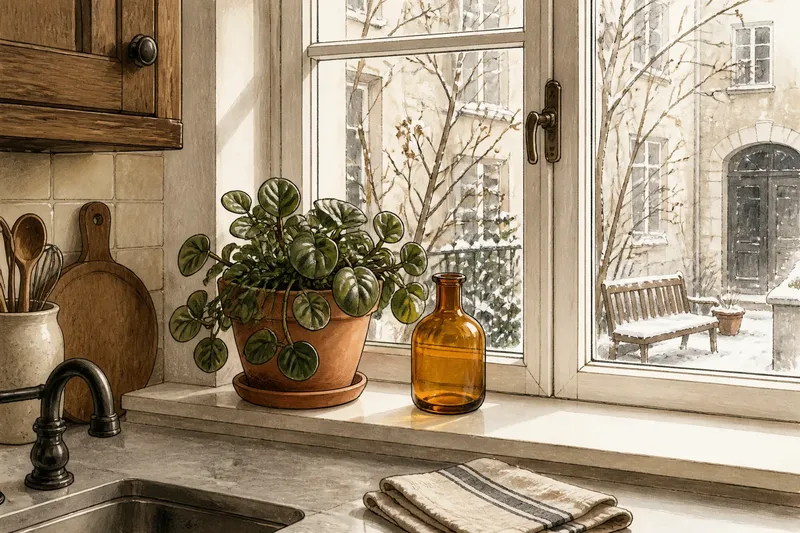
Imagine Lena, in an invented situation, with a narrow kitchen sill, a peperomia in a nursery pot, a small amber bud vase, and a courtyard view she enjoys over breakfast. She wants a composed display, but the pots have spread across the sill and collect crumbs near the sink. Her aim is not to create a miniature garden; it is to give the window a quiet, seasonal detail without making the sill harder to use.
Let the window frame shape the arrangement
Lena begins by noticing the window itself: its frame, latch, and opening direction. The frame offers a natural boundary for the display, while the latch needs to remain easy to reach. She also considers what she uses the sill for. If she sets down a mug there while cooking, the arrangement should leave that working spot open.
Rather than filling the length with matching pots, she groups the peperomia near one end and leaves a clear stretch beside it. The grouping looks intentional because the plants relate to one another, while the empty area makes the narrow sill feel less like storage. A quick wipe with a damp cloth remains possible without moving every object.
Use a simple palette for plants and vessels
Lena keeps the palette restrained: green foliage, a matte clay-colored pot, and the amber glass vase. A small shift in texture gives the display interest without introducing another competing color. Ceramic, terracotta, glass, and woven materials can each add a different feel, but a narrow sill rarely needs all of them at once.
She checks the vessel before placing the plant. If the peperomia is in a nursery pot, that pot can sit inside a cachepot, provided Lena lifts it out to water and empties any collected water afterward. If she plants directly into a decorative pot, drainage and a suitable saucer matter. The choice is practical as well as visual: the vessel should be easy to lift and clean.
Make the accent feel connected to the room
The amber vase earns its place because its warm glass echoes the wooden cabinet across the kitchen. Lena leaves it empty rather than adding flowers that would need tending, and sets it beside the plants rather than among their leaves. Its job is to add a small note of warmth, not to compete with the greenery.
Say Lena later decides the vase looks too decorative beside the sink. She replaces it with a shallow ceramic dish that holds a few loose tea bags during breakfast; the observable result is a more useful grouping, with the dish still repeating the pot’s earthy color. If the dish starts collecting clutter, she removes it and keeps the plants alone.
Choose plants for the conditions the sill offers
Even a small display has to suit its location. The light may be bright or dim, and a window can bring cold glass, drafts, or nearby heat into the picture. Lena checks the plant label, observes the spot through the day, and avoids choosing a plant solely because its leaves fit the color scheme.
She keeps foliage from pressing against the glass and leaves enough room to lift the pot for inspection. Before watering, she checks the growing medium rather than following a fixed calendar, then empties standing water from the saucer. If the sill feels too cold or the plant shows signs of stress, she can move it to a more suitable spot and use a nonliving accent on the sill instead.
What should you consider before styling a winter windowsill?
Which plants work on a narrow windowsill?
Compact plants can be easier to arrange, but their needs matter more than their size. Check the plant label and match its light and temperature preferences to the actual conditions at the window.
Should a windowsill plant go in a cachepot?
A nursery pot inside a cachepot is convenient when you lift it out for watering and pour away excess water. For direct planting, choose a vessel with drainage and use a saucer that is easy to empty.
How do you keep the sill from looking crowded?
Group related pots near one end and leave a usable patch of sill visible. Remove any object that makes cleaning, opening the window, or using the counter awkward.
What can replace a vase as a winter accent?
A small ceramic dish, a smooth stone, or another simple object can add texture without needing plant care. Choose something that suits the room and does not take over the display.
Make a small change, then live with it
For Lena, the finished sill holds one compact plant, its clay-colored pot, and the amber vase, with open space beside them for kitchen tasks. The result is less about framing a particular view than about making a small surface feel considered and easy to maintain. If the season changes the light or the sill’s daily use, she can trade the accent or move the plant; the arrangement does not need to stay fixed to feel complete.